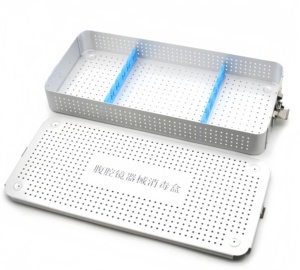
Sterilization Tray Ophthalmic Microsurgical Instruments Surgical Autoclavable Silicone Disinfection Box
SKN012 Hospital Stainless Steel Surgical Instrument Impression Trays
Custom Medical Grade OEM White PP Plastic Tray For Surgical Instruments Packaging YZG Brand
FY Brand Stainless Steel Sterile Containers for Endoscope Sterilized Aluminum Boxes Trays
Professional Modern Stainless Steel Hospital Mayo Stand Medical Instrument Cart Height Adjustable
BR-SS88 SS201 High Quality Hospital Surgical Instrument Stainless Steel Trays With Lids
22*11*2cm 304 Stainless Steel Square Plate Tray For Lab Instrument Supplies & Dental Surgery
SUS304 Stainless Steel Single-Bar Surgical Instrument Tray Stand Adjustable Height 940-1200mm
25,000+
Surgical SKUs Produced
ISO 13485
Certified Quality Management
100%
Autoclave Passivation Rate
Strategic Manufacturing Authority: Why China Leads Global Medical Tray Production
In modern clinical environments, surgical instrument trays serve as the fundamental baseline for infection control, sterile processing efficiency, and surgical tool longevity. As hospitals, Central Sterile Supply Departments (CSSD), and medical device distributors demand higher compliance under regulations such as EU MDR 2017/745 and US FDA 21 CFR Part 820, sourcing from premier manufacturing hubs has become a strategic priority.
China's surgical instrument manufacturing ecosystem combines advanced metallurgical processing, deep-drawing stainless steel stamping, precision CNC laser perforation, and automated electropolishing. China manufacturers provide global healthcare buyers with an unmatched balance of technological sophistication, scalable OEM capacities, and rigorous international certification.
Information Gain Insight: Unlike standard hollowware vendors, top-tier Chinese exporters implement automated passivation chemical dipping compliant with ASTM A967. This process guarantees that every SUS304 and SUS316L tray forms a chromium oxide passive layer capable of resisting over 3,000 continuous steam sterilization cycles without pitting or surface oxidation.
ISO 13485 & CE MDR Compliance
Fully compliant with international quality management systems. All sterilization boxes, wire mesh baskets, and Mayo stands undergo full traceability audits, cleanroom packaging, and EUDAMED registration.
Metallurgical Precision & Materials
Sourced from premium AISI 304, AISI 316L stainless steel, aircraft-grade anodized 6061 aluminum, and USP Class VI medical silicone. Designed for maximum tensile strength and chemical resistance.
Turnkey OEM / ODM & Private Label
Low MOQ custom molding starting from 300 units. Full laser marking, custom dimensions, silicone insert tooling, and tailor-made packaging solutions for global brand holders.
In-Depth Classification of Surgical Instrument Trays
Surgical trays are specialized medical devices categorized by material engineering, sterilization mechanics, and surgical application. Procuring managers must select specific tray configurations based on instrument fragility, autoclave parameters, and workflow mobility.
1. Autoclavable Silicone & Micro-Instrument Sterilization Trays
Ophthalmic, neurosurgical, and micro-cardiovascular tools feature ultra-delicate tips that degrade under physical impact. Chinese manufacturers lead in combining hard-anodized aluminum or high-impact polyetherimide (PEI) shells with soft Shore-A 40 medical silicone finger mats. These mats secure microsurgical forceps, needle holders, and scissors in fixed positions, preventing lateral movement during steam autoclaving up to 138°C (280°F) or ethylene oxide (EtO) gas cycle processing.
2. Stainless Steel (SUS304 / SUS316L) Perforated & Wire Mesh Trays
Designed according to DIN 58953 European standard dimensions, heavy-duty stainless steel wire mesh trays provide maximum steam penetration and rapid condensate drainage. Smooth, burr-free weld spots produced via automated argon-arc micro-welding ensure that sterile wraps remain unpunctured. High-grade SUS316L variants are utilized in aggressive chemical baths and hydrogen peroxide plasma sterilizers to eliminate pitting corrosion.
3. Polypropylene (PP) Disposable & Custom Procedure Trays
For custom procedure kits, emergency prep kits, and single-use surgical packs, medical-grade thermoformed Polypropylene (PP) trays offer an economical, bio-compatible sterile barrier system. Chinese cleanroom facilities manufacture non-toxic, latex-free PP trays featuring custom compartment depths to hold procedure-specific tools, drapes, and antiseptics.
4. Operating Room Mayo Stands & Height-Adjustable Cart Systems
Intra-operative fluid management and rapid tool access demand mobile surgical tray platforms. Modern stainless steel Mayo stands feature hydraulic or friction-lock single-bar and double-bar posts adjustable from 940mm to 1200mm. Equipped with anti-static, medical-grade swivel casters with independent braking mechanisms, these tray carts form a non-magnetic, highly stable sterile field adjacent to the operating table.
Future Procurement Trends in Surgical Instrument Trays (2025–2030)
The global surgical hollowware market is undergoing a major technological transformation driven by hospital sustainability mandates, automated CSSD robotics, and digital inventory tracking. Sourcing directors must align their procurement strategies with four key emerging industry trends:
1. Transition to Rigid Container Closed-Loop Systems
Hospitals are actively phasing out single-use blue sterilization wrap due to environmental waste and puncture risks. Closed-loop rigid aluminum and stainless steel sterilization containers with permanent PTFE thermal filters are becoming the standard, offering 5,000+ cycle guarantees and zero wrap waste.
2. Smart RFID & Matrix Barcode Embedded Trays
Traceability is paramount. Future surgical trays manufactured in China feature integrated 2D DataMatrix laser engraving and high-temperature UHF RFID chip slots. This enables automated CSSD scanning, real-time tool counting, and automated ERP record updates for surgical instrument lifecycle management.
3. Modular Ergonomic Standardization & Weight Reduction
To reduce CSSD worker strain, international guidelines now limit loaded tray weights to 25 lbs (11.3 kg). Next-generation trays leverage lightweight hybrid titanium-aluminum alloys, honeycomb mesh patterns, and ergonomic silicone handles to optimize weight without compromising rigidity.
4. Custom Tool-Specific Silicone Bracket Integration
Surgical procedures are increasingly robotic and minimally invasive (MIS). Custom trays now demand 3D CAD engineered silicone holders matching exact laparoscopic optic shafts, endo-cutters, and robotic arms, eliminating tool displacement during transport.
Advanced Manufacturing Technology & Surface Treatment Innovations
Leading Chinese exporters are investing heavily in advanced metallurgical surface engineering to extend product life cycles and enhance cleanability:
- Electrochemical Polishing (Electropolishing): Unlike mechanical buffing which can trap micro-abrasives in metal pores, electropolishing microscopically strips surface iron atoms, leaving a smooth, mirror-like chromium-rich surface. This reduces protein adhesion by up to 85% during surgical operations.
- Plasma Electrolytic Oxidation (PEO) for Aluminum: Provides a ceramic-like coating over anodized aluminum container lids, rendering them highly resistant to alkaline detergents (pH > 10) commonly utilized in automated washer-disinfectors.
- Laser-Micro Welding Technology: Replaces traditional spot welding with continuous fiber laser welding, eliminating micro-crevices where bio-burden and bacterial spores can accumulate.
Technical Specifications & Material Selection Matrix
Use the data matrix below to evaluate material grade suitability for your hospital network or wholesale product catalog:
| Material Category |
Grade Specifications |
Autoclave Temp (Max) |
Corrosion Resistance |
Estimated Lifespan |
Primary Clinical Application |
| Austenitic Stainless Steel |
AISI 304 / SUS304 |
134°C (273°F) |
High (Electropolished) |
10+ Years / 3,000+ Cycles |
General Operating Trays, Mayo Stands, Wire Baskets |
| Acid-Proof Stainless Steel |
AISI 316L / SUS316L |
138°C (280°F) |
Ultra-High (Pitting Resistant) |
15+ Years / 5,000+ Cycles |
Implant Trays, Harsh Chemical Bath Containers |
| Anodized Aluminum Alloy |
6061-T6 Aircraft Grade |
134°C (273°F) |
Medium-High (Anodized Layer) |
5 - 8 Years |
Sterilization Container Lids, Endoscope Boxes |
| Medical Grade Silicone |
USP Class VI / Liquid Silicone |
140°C (284°F) |
Inert to Chemicals |
3 - 5 Years |
Fixation Finger Mats, Delicate Tool Holders |
| Medical Polypropylene |
Non-Toxic Virgin PP |
121°C (250°F) |
Chemical Resistant |
Single-Use / Limited Reuse |
Procedure Kits, Disposable Disinfection Basins |
Frequently Asked Questions (B2B Procurement FAQ)
Find authoritative answers to technical, regulatory, and commercial sourcing questions regarding surgical instrument trays from China.
Q1:
What stainless steel grade is optimal for heavy-duty hospital sterilization trays?
AISI 304 (SUS304) is the industry standard for general operating room instrument trays and Mayo stands, balancing high tensile strength with excellent corrosion resistance. For environments involving high-saline fluids or hydrogen peroxide plasma sterilization, AISI 316L is recommended due to its higher molybdenum content, which prevents pitting corrosion.
Q2:
How do Chinese manufacturers comply with EU MDR and US FDA regulations?
Reputable manufacturers hold ISO 13485:2016 quality management certification audited by notified bodies such as DEKRA or SGS. Products are registered under CE MDR Class I (with complete Technical Documentation and UDI identification) and registered with the US FDA (Establishment Registration & Device Listing), enabling smooth customs clearance and hospital deployment.
Q3:
Can I order custom tray dimensions and silicone insert layouts for OEM projects?
Yes. Factories offer end-to-end OEM/ODM services. Using 3D CAD models or physical instrument samples, engineers design custom stamping dies and liquid silicone injection molds. Prototype samples are typically generated within 7–14 working days, with mass production starting upon client validation.
Q4:
What quality testing is performed on surgical instrument trays prior to export shipment?
Quality control involves a 5-stage testing process: (1) Raw material spectrographic chemical analysis, (2) Salt spray testing (ASTM B117) to verify corrosion resistance, (3) Autoclavability thermal shock cycles, (4) Weld-joint pull testing, and (5) Dimensional verification against DIN 58953 standards.
Q5:
What is the standard lead time and MOQ for international OEM orders?
Standard catalog items have low MOQs (often starting at 50–100 units per SKU). Custom OEM branded orders generally require an MOQ of 300 units. Production lead times average 15 to 25 working days, with expedited air freight (5–7 days) or economical sea freight options available worldwide.
Q6:
Why are perforated hole patterns preferred over solid bottom trays for autoclaving?
Perforated holes and wire mesh designs allow rapid, uniform steam circulation around the surgical instruments and prevent condensate accumulation ("wet packs"). Dry instruments prevent post-sterilization re-contamination and rust formation.
Partner with China's Premier Surgical Tray Manufacturer
Request our comprehensive 2025 product catalog, receive factory-direct B2B pricing, or consult with our OEM engineering team for custom tray development.