Technical specifications, care & sterilization protocols, and manufacturing insights from our Sialkot facility.
In-depth articles covering German-grade steel grades, DIN compliance, and CE regulatory standards.
Professional insights for surgeons, dentists, and medical procurement specialists worldwide.
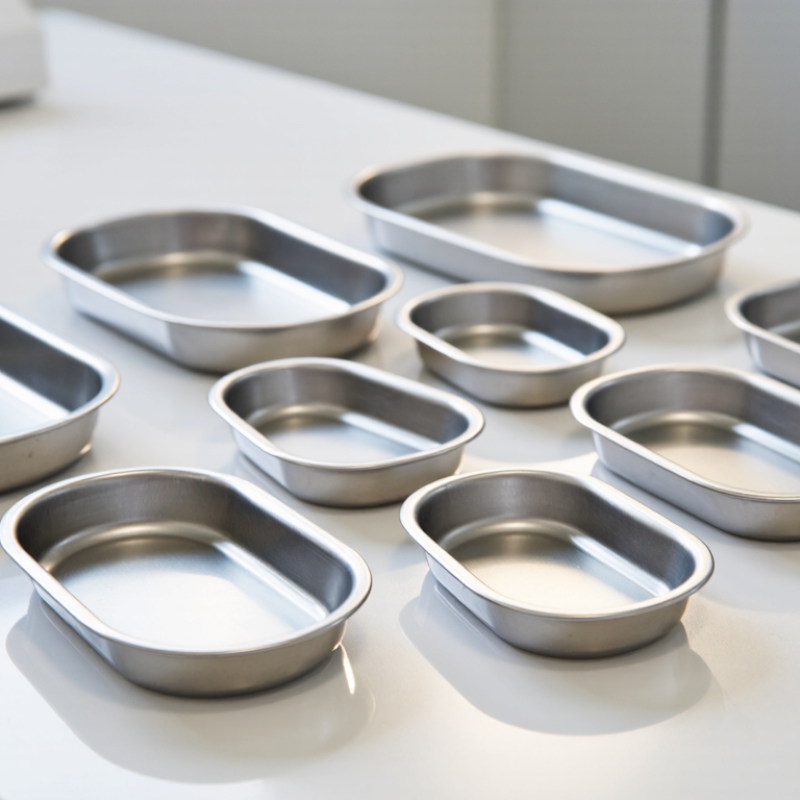
Choosing the right Stainless Steel Kidney Trays requires more than comparing prices or polished product photographs. Global buyers must examine material quality, tray shape, edge safety, surface finish, and supplier reliability. A well-made tray should feel balanced in the hand, resist corrosion, and remain easy to clean after repeated use. Its curved kidney profile should support instruments, dressings, or clinical materials without sharp corners or unstable movement.
This guide reviews the Top 10 Stainless Steel Kidney Trays for Global Buyers through a practical and evidence-based lens. Each option is considered for stainless steel grade, manufacturing consistency, dimensions, weight, weld quality, packaging, and available documentation. Details such as a smooth rim, uniform polishing, and protective export packaging can affect daily performance more than buyers expect. Small defects matter.
Supplier experience also deserves attention. Buyers should request product specifications, inspection records, sample approval, and clear information about production capacity. Documentation requirements may differ across markets, so independent verification remains important. No ranking can replace hands-on evaluation.
That limitation matters.
A tray that works well in a small clinic may not suit a busy hospital, dental practice, laboratory, or medical distributor. Some products may look similar but perform differently after repeated sterilization and handling. This comparison highlights practical strengths, possible weaknesses, and questions worth asking before purchase. It also encourages buyers to assess total value, not only the lowest quoted price. Reliable sourcing begins with careful observation, realistic requirements, and suppliers willing to provide consistent evidence.
A stainless steel kidney tray is a shallow, kidney-shaped medical receptacle. Its curved edge follows the patient’s body. Staff use it to collect fluids, dressings, small instruments, or removed materials during examinations and procedures. The tray also supports organized bedside work, especially when space is limited.
It is usually made from corrosion-resistant stainless steel, often selected for strength, smooth surfaces, and repeated cleaning. A well-finished tray has rounded edges, stable balance, and no deep scratches.
Small detail, big consequence.
Scratches and dents can retain soil, making inspection and cleaning more difficult. The CDC states that cleaning must occur before disinfection or sterilization because remaining organic material can reduce processing effectiveness.
Its importance becomes clearer beside infection-control data. The WHO Global Report on Infection Prevention and Control, published in 2022, estimated that healthcare-associated infections affect about 7% of patients in high-income countries and 15% in low- and middle-income countries.
A kidney tray cannot prevent infection alone. However, its cleanable surface and compatible design can support safer workflows. Users should confirm the tray’s grade, load capacity, and sterilization instructions before purchase. Not every stainless steel tray tolerates every chemical or autoclave cycle.
That assumption needs reconsideration.
Procurement teams should also inspect welds, corners, drainage, and packaging quality. A tray may look polished, yet poor finishing can undermine practical performance.
Top 10 Stainless Steel Kidney Trays for Global Buyers
Key Features That Define High-Quality Kidney Trays
A high-quality kidney tray begins with verified stainless steel, not a bright finish. Common choices include 304 or 316L grades, selected according to chemical exposure and clinical use. The metal should resist staining, pitting, and repeated autoclave cycles. Smooth, rounded edges reduce glove damage and make manual cleaning safer. Seamless construction is preferable, although poorly finished welds can still trap soil. Details matter.
The WHO’s 2022 Global Report on Infection Prevention and Control estimates that 7 in 100 acute-care patients in high-income countries acquire healthcare-associated infections. The figure rises to 15 in low- and middle-income countries. Tray design cannot solve infection risks alone, but cleanability is a practical control. Buyers should request corrosion testing, dimensional tolerances, and documented material certificates. CDC sterilization guidance also supports validated steam processes for heat-stable medical equipment. Therefore, trays should tolerate repeated heat, moisture, and approved detergents without warping. Not appearance alone.
A useful tray should remain stable on a flat surface, carry fluids without flexing, and stack without sticking. Its internal curve needs enough depth for safe handling, yet not so much that inspection becomes difficult. Traceable batch markings improve purchasing accountability. I would also examine the drainability after washing; this detail is often overlooked. One laboratory test is never enough. Supplier documentation, sample inspection, and real cleaning trials should work together.
How the Top 10 Stainless Steel Kidney Trays Compare
Comparing the top 10 stainless steel kidney trays requires more than checking their prices. The strongest options usually use medical-grade 304 stainless steel, while 316 steel offers better resistance in demanding environments. Each tray should have a smooth, polished surface and a rounded rim. These details reduce fluid retention and improve handling during clinical procedures. Depth also matters. A shallow tray may suit dressings, while a deeper design can hold instruments or liquid securely. However, product dimensions are sometimes measured differently. Buyers should confirm internal measurements, not only the listed external size.
Construction quality separates similar-looking trays. Inspectors should check for even welds, firm edges, stable bases, and clean corners. A tray that feels too light may be easier to carry, but it can slide or bend under repeated use. Heavier models often feel safer, though they may increase handling fatigue. The top 10 designs also differ in polishing quality, stacking ability, sterilization tolerance, and packaging protection. In my experience, small dents often begin with poor carton support, not the tray itself. That detail is easy to overlook.
Tips: Request material certificates, dimensional drawings, and sample photos before ordering. Ask how the tray performs after repeated cleaning cycles. Do not judge quality from shine alone. A bright finish can hide weak edges or uneven workmanship. Buyers should also test the tray with gloved hands, because smooth handling is more valuable than appearance. Rechecking supplier data is wise, since some specifications may be incomplete or need clarification.
| Rank | Tray Configuration | Typical External Dimensions (L × W × D) |
Material | Approx. Usable Capacity | Approx. Weight | Autoclave Suitability | Best-Fit Application |
|---|---|---|---|---|---|---|---|
| 1 | Standard 12-inch kidney tray | 305 × 165 × 45 mm (12.0 × 6.5 × 1.8 in) |
AISI 304 stainless steel, 18/8 | Approx. 0.90 L | Approx. 0.48 kg | Yes, typically up to 134°C | General ward, dressing, and procedure-room use |
| 2 | Large 14-inch kidney tray | 355 × 190 × 50 mm (14.0 × 7.5 × 2.0 in) |
AISI 304 stainless steel, 18/8 | Approx. 1.25 L | Approx. 0.68 kg | Yes, typically up to 134°C | Larger procedures and higher-volume fluid collection |
| 3 | Compact 10-inch kidney tray | 255 × 140 × 40 mm (10.0 × 5.5 × 1.6 in) |
AISI 304 stainless steel, 18/8 | Approx. 0.55 L | Approx. 0.34 kg | Yes, typically up to 134°C | Outpatient clinics, dental care, and minor procedures |
| 4 | Deep 12-inch kidney tray | 305 × 165 × 65 mm (12.0 × 6.5 × 2.6 in) |
AISI 304 stainless steel, 18/8 | Approx. 1.20 L | Approx. 0.58 kg | Yes, typically up to 134°C | Fluid containment where additional depth is preferred |
| 5 | Small 8-inch kidney tray | 205 × 115 × 35 mm (8.1 × 4.5 × 1.4 in) |
AISI 304 stainless steel, 18/8 | Approx. 0.28 L | Approx. 0.22 kg | Yes, typically up to 134°C | Pediatric, bedside, and compact clinical settings |
| 6 | Extra-large 16-inch kidney tray | 405 × 220 × 55 mm (16.0 × 8.7 × 2.2 in) |
AISI 304 stainless steel, 18/8 | Approx. 1.75 L | Approx. 0.95 kg | Yes, typically up to 134°C | Operating rooms and high-volume clinical procedures |
| 7 | Polished 10-inch kidney tray | 255 × 140 × 45 mm (10.0 × 5.5 × 1.8 in) |
AISI 304 stainless steel, 18/8 | Approx. 0.62 L | Approx. 0.38 kg | Yes, typically up to 134°C | Routine treatment, examination, and instrument handling |
| 8 | Heavy-duty 12-inch kidney tray | 305 × 165 × 50 mm (12.0 × 6.5 × 2.0 in) |
AISI 316 stainless steel | Approx. 1.00 L | Approx. 0.56 kg | Yes, typically up to 134°C | Environments requiring enhanced corrosion resistance |
| 9 | Narrow 10-inch kidney tray | 255 × 125 × 40 mm (10.0 × 4.9 × 1.6 in) |
AISI 304 stainless steel, 18/8 | Approx. 0.45 L | Approx. 0.30 kg | Yes, typically up to 134°C | Limited-space carts, dental rooms, and bedside care |
| 10 | Deep 14-inch kidney tray | 355 × 190 × 65 mm (14.0 × 7.5 × 2.6 in) |
AISI 304 stainless steel, 18/8 | Approx. 1.55 L | Approx. 0.78 kg | Yes, typically up to 134°C | High-capacity collection and surgical support procedures |
For a top-10 comparison, stainless steel kidney trays should be judged beyond appearance. Type 304 stainless steel suits many routine clinical environments. Type 316 may offer better resistance where saline or aggressive fluids are common. Surface finishing matters too. A smooth, polished interior supports easier cleaning and inspection. Welds, rolled edges, and handles should feel secure, without sharp points.
Size and shape affect daily efficiency. A shallow tray may support minor procedures, while a deeper model reduces splash risk. Curved kidney profiles should follow the body’s contours closely. Poor symmetry can create unstable stacking and wasted storage space. Measure length, width, depth, and usable capacity, not only advertised dimensions. Sterilization compatibility must be confirmed against the facility’s process. Steam autoclaving is common, but temperature, exposure time, drying, and packaging requirements vary. Buyers should request material certificates, dimensional tolerances, and validated care instructions.
Tips: Check the tray after repeated sterilization cycles. Look for discoloration, warped rims, loose welds, or trapped residue. Choose nestable sizes when storage space is limited. Do not assume a heavier tray is stronger. Weight can reflect thicker steel, but it can also reduce handling comfort. A perfect specification does not guarantee perfect use; staff feedback and trial samples remain valuable before volume purchasing.
Material, Size, Shape, and Sterilization Considerations
Chart guide: The chart compares representative nominal kidney-tray dimensions in centimeters. Actual dimensions may vary by supplier, production tolerance, rim design, and intended clinical use.
Global buyers should assess stainless steel kidney trays beyond price and polished product photos. A dependable supplier states the steel grade, tray dimensions, wall thickness, surface finish, and production tolerance. Common choices include 304 stainless steel for general use and 316 stainless steel for harsher environments. Ask for material certificates, inspection records, and clear product drawings. Vague answers deserve caution.
Supplier quality systems matter. ISO 13485 certification may support medical-device production controls, but certification alone proves little about every tray. Check the certificate scope, issuing body, validity, and manufacturing address. Request samples from the same production line used for bulk orders. Inspect welds, rolled edges, handles, and drainage behavior. Small defects can become cleaning problems. They happen.
Import preparation requires accurate documents. Confirm the HS classification with a licensed customs professional before shipment. Commercial invoices should match quantities, materials, and declared values. Packing lists must show carton counts and net weights. Discuss country-of-origin marking, labeling, sterilization status, and reusable-device instructions. Incoterms should be written clearly, especially responsibility for freight, insurance, and customs charges. Pre-shipment inspection can verify dimensions, finish, packaging, and random sampling. However, one inspection cannot guarantee every carton. Recheck the contract, photographs, and seal numbers before release. A supplier with responsive communication, traceable records, and realistic lead times is usually safer than the cheapest quotation.
Verified 304 stainless steel suits many routine clinical settings. A 316-grade option may resist saline and aggressive fluids better. Material certificates matter more than shine.
Look for smooth interiors, rounded edges, secure welds, and no sharp points. Poor welds can trap residue. Inspect closely.
The tray should drain well after washing and tolerate approved detergents. A smooth surface makes residue easier to notice. One laboratory test is not enough.
Measure length, width, depth, and usable capacity before purchasing. A shallow tray suits minor procedures, while deeper sides reduce splash risk. Curves should feel balanced.
Confirm compatibility with the facility’s steam process, temperature, drying, and packaging requirements. After several cycles, check for stains, warped rims, loose welds, or trapped residue. Heat exposes weaknesses.
Not necessarily. Greater weight may indicate thicker steel, but it can reduce handling comfort. Staff feedback and trial samples are still needed. Specifications can mislead.
Request material certificates, product drawings, dimensional tolerances, inspection records, and care instructions. Samples should come from the same production line as bulk orders. Vague answers deserve caution.
Match invoices, packing lists, quantities, materials, and carton weights carefully. Confirm classification with a qualified customs professional. Write freight, insurance, and customs responsibilities clearly. Cheap quotes can become expensive.
Stainless Steel Kidney Trays are versatile medical and laboratory containers designed to collect fluids, hold instruments, and support organized procedures. Their curved kidney shape fits comfortably beside a patient or work area, while stainless steel construction provides strength, corrosion resistance, and easy cleaning. This guide explains the main features of high-quality trays, including smooth surfaces, secure edges, balanced weight, stable construction, and compatibility with repeated sterilization. It also compares ten representative tray types by capacity, dimensions, design, and intended use.
For global buyers, choosing the right tray requires careful consideration of material grade, size, depth, shape, surface finish, and sterilization method. The guide also highlights practical questions to ask suppliers about quality control, packaging, documentation, production consistency, and international shipping. By evaluating performance, durability, usability, and purchasing requirements together, healthcare distributors, laboratories, and medical facilities can select Stainless Steel Kidney Trays that provide reliable service and consistent value across different operating environments.