Choosing the right Autoclave Sterilization Drums in 2026 requires more than comparing prices and polished product photos. Global buyers must examine material quality, pressure performance, loading capacity, and compatibility with their sterilization workflow. A drum may look robust yet fail to fit standard autoclave chambers or routine inspection procedures. Small details matter. Lid seals, locking mechanisms, drainage design, and surface finishing can affect daily reliability.
This guide introduces practical considerations for hospitals, laboratories, dental clinics, and regulated industrial facilities. It focuses on stainless steel grades, reusable construction, heat distribution, corrosion resistance, and documented quality controls. Experienced users often check weld consistency and hinge movement before reviewing technical brochures. They also confirm whether replacement seals and service support are available in their region. That step is easy to overlook.
No single drum suits every facility. Chamber dimensions, sterilization cycles, instrument types, and local purchasing requirements can change the best choice. Buyers should verify manufacturer specifications, validation records, and applicable safety standards before ordering. Supplier claims should be compared with test evidence and independent technical advice. This is where many buying guides remain too optimistic. Real performance depends on maintenance, correct loading, and trained operators.
The 2026 market offers more designs, but greater variety can create confusion. A reliable selection process should balance durability, usability, total ownership cost, and traceable documentation. The goal is not simply to find the largest or cheapest drum. It is to choose equipment that supports repeatable sterilization and dependable daily work. Safety comes first.
Autoclave Sterilization Drums: Purpose, Types, and 2026 Market Scope
Autoclave Sterilization Drums: Purpose, Types, and 2026 Market Scope
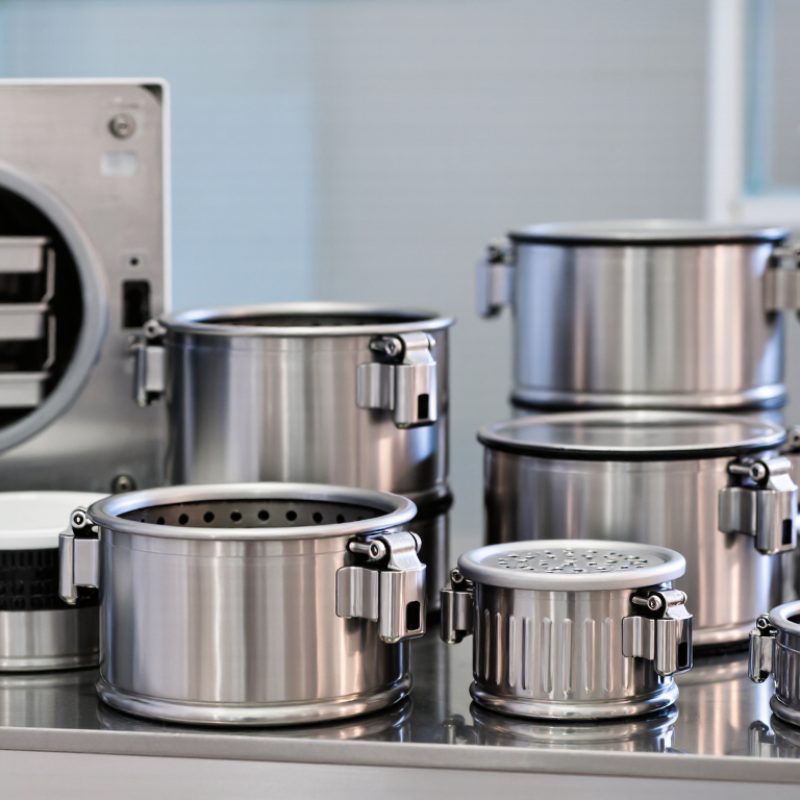
Autoclave sterilization drums hold surgical instruments, laboratory tools, and wrapped supplies during steam processing. Their perforated walls support steam circulation and reduce trapped air. After cooling, the drum also helps protect sterile contents from handling and environmental exposure. Practical users should inspect hinges, seals, filters, and corrosion after every cycle. Small defects matter.
Common types include perforated drums, solid-wall transport drums, and modular drums with replaceable filter systems. Perforated models suit routine steam penetration. Solid-wall designs may support safer post-cycle movement but need validated internal packaging. ISO 17665 requires documented moist-heat sterilization processes, while CDC guidance stresses correct loading, exposure time, temperature, and drying. A strong drum cannot compensate for poor cycle control.
Market demand is widening through hospitals, dental clinics, laboratories, and outpatient centers. Fortune Business Insights estimated the global autoclave market at about USD 4.8 billion in 2023, with continued growth expected through 2030. The WHO and UNICEF JMP 2023 report found that basic hygiene services remained unavailable in many healthcare facilities worldwide. That infrastructure gap affects sterilization planning. Buyers in 2026 should compare usable volume, pressure ratings, local servicing, validation records, and replacement-filter availability. Price alone misleads. A heavier drum is not automatically safer, and some published market forecasts remain difficult to compare because their product definitions differ.
2026 Best Autoclave Sterilization Drums for Global Buyers
Purpose, Types, and Reference Steam-Cycle Exposure Times
The chart compares commonly referenced minimum exposure times for wrapped instruments in steam sterilization. Gravity-displacement cycles commonly use 121°C for 30 minutes, while dynamic-air-removal cycles commonly use 132°C for 4 minutes. Actual drum selection should also consider load density, material compatibility, chamber capacity, drying performance, and the sterilizer manufacturer’s validated instructions.
Reference: CDC, Guideline for Disinfection and Sterilization in Healthcare Facilities, recommended minimum steam-sterilization exposure parameters for wrapped instruments.
Core Drum Specifications: 121°C, 15 psi, and 30-Minute Sterilization Cycles
Autoclave drums built for global procurement should be judged against validated cycle data, not pressure alone. The CDC Guideline for Disinfection and Sterilization in Healthcare Facilities lists 121°C, about 15 psi, for 30 minutes in gravity-displacement sterilizers. That reference applies to specific loads and wrapping conditions. It is not a universal promise.
At 121°C, saturated steam must contact every internal surface. Buyers should inspect lid seals, perforations, drain paths, and corrosion-resistant construction. Ask for heat-distribution studies and biological-indicator records. Paper claims are insufficient. ISO 17665:2024 emphasizes validated moist-heat processes and defined load configurations. Therefore, a supplier should state usable volume, empty weight, maximum loading, and cycle compatibility. Pressure readings may also vary with altitude and gauge calibration.
A 30-minute exposure does not include air removal, come-up, or drying time. This distinction affects throughput and labor planning. Many purchasing sheets miss it. During evaluation, place temperature probes near the coldest expected position, then compare repeated runs. Uneven packing can create a dry pocket behind dense textiles. That failure is easy to overlook. Maybe the specification is too neat. Real facilities vary. Use the 121°C, 15-psi, 30-minute target only after load validation, routine monitoring, and documented maintenance.
Sources: CDC sterilization guideline, ISO 17665:2024, and AAMI ST79.
Validation Benchmarks: ISO 17665 Compliance and a 10⁻⁶ Sterility Assurance Level
For global buyers, the best autoclave sterilization drums should support documented validation, not merely withstand high temperature. ISO 17665 requires a controlled moist-heat process, defined load patterns, and repeatable operating conditions.
Drum design matters here. Tight lids, reliable seals, drainage paths, and visible indicators help reduce cold spots and trapped air.
A sterility assurance level of 10⁻⁶ means a validated process targets no more than one surviving microorganism per million sterilized items. It is a probability, not a result proven by one biological indicator.
Validation should include temperature mapping, pressure records, chemical indicators, biological indicators, and product-specific load studies. Experienced teams also review drying performance, because residual moisture can weaken packaging and later compromise handling.
I have seen validation plans fail when the test load was lighter than the real surgical load. That mistake is easy to miss.
Tips:
Request complete validation records before purchasing.
Check whether the drum’s tested configuration matches your instruments and packaging.
Confirm calibration intervals and acceptance criteria.
Keep cycle records traceable.
Do not assume a passing factory test guarantees your facility’s 10⁻⁶ target.
Revalidation may be needed after repairs, load changes, or altered utilities.
Small details matter.
Conclusion
Autoclave Sterilization Drums are essential containers for preparing, protecting, and processing instruments, laboratory materials, and other heat-resistant items during steam sterilization. In 2026, global buyers should evaluate drum type, internal capacity, loading efficiency, and compatibility with routine and high-temperature cycles. Core operating references commonly include 121°C at approximately 15 psi for about 30 minutes, while selected applications may require 134°C cycles. Actual settings should be confirmed through validated procedures and load-specific instructions.
Reliable drums should combine pressure-resistant construction, secure closures, corrosion resistance, and a design that supports consistent steam penetration and air removal. Buyers should also review validation evidence aligned with ISO 17665 and seek processes capable of achieving a 10⁻⁶ sterility assurance level when required. A complete purchasing assessment should compare capacity, cycle flexibility, material quality, certification and documentation, maintenance needs, service life, and total cost of ownership. Selecting equipment based on verified performance rather than price alone helps support safe, repeatable, and efficient sterilization across international operations.